

How to Accept More Payment Types at Your Store With a Modern POS
Payment flexibility has quietly become one of the biggest factors separating stores that keep customers happy from stores that lose them without ever knowing why. A shopper who can’t tap their phone, split a payment, or use their preferred card walks away with a small but real reason to try the next store instead. For liquor stores and neighborhood markets running tight margins, that kind of quiet attrition adds up fast. A2Z POS was built to close exactly these gaps, giving stores one system that handles every payment type customers actually want to use.
The Cost of Limited Payment Options Is Easy to Miss
Every customer who can’t pay the way they intended either walks out or files away a small moment of frustration for next time. A shopper who wanted to tap their phone but got handed a chip reader instead notices the inconvenience. A customer trying to split a payment between cash and card, only to be told the system can’t do that, might just leave the extra items behind. None of these moments look like much on their own, but across a month, they add up to lost revenue that never shows up as a clear line item anywhere.
A Pos payment processing system built to support more payment types isn’t about chasing new technology for its own sake. It’s about closing small gaps that quietly cost sales every day, and it’s exactly the problem A2Z POS was designed to solve, by making sure a store never has to say no to a customer’s preferred way of paying.
The Non-Negotiables: Chip, Swipe, and Manual Entry
Every store needs a reliable foundation: chip card reading, magnetic stripe swiping, and manual card entry for the moments when a card just won’t read. None of these are advanced features, they’re the baseline. A pos card machine that struggles with any of these basics creates friction before a store can even consider adding anything more advanced on top.
Manual entry in particular tends to get overlooked until it’s suddenly needed. When a card fails to read, staff need a fast, secure way to key in the number without slowing the line or exposing customer data to unnecessary risk. A2Z POS handles manual entry with full PCI compliance built in, so staff never have to choose between speed and security when a card won’t cooperate.
Contactless Payments Have Become the Expectation, Not the Exception
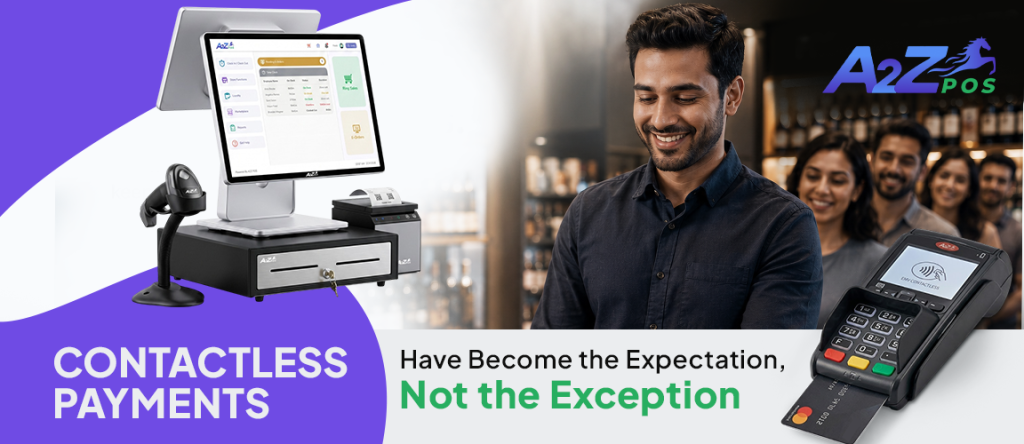
POS contactless payment support has shifted from a nice-to-have into something customers simply expect. Apple Pay, Google Pay, and tap-enabled cards let a purchase complete with a quick tap instead of a chip insert and wait. That shaved-off time matters more than it seems, and during a packed Friday night, those extra seconds saved per transaction compound into a visibly shorter line.
Customers who tap to pay at gas stations, coffee shops, and grocery stores everywhere else have been trained to expect the same convenience at every counter. This is one of the areas where A2Z POS directly solves a common pain point, supporting contactless payments natively at checkout so stores never fall behind customer expectations shaped by every other place they shop.
EBT Comes With Rules That Can’t Be Left to Memory
Accepting EBT opens the door to a meaningful segment of customers buying everyday groceries and snacks with a Snap EBT card. But for liquor stores specifically, federal rules do not allow EBT funds to be used for alcohol purchases. A store selling both groceries and alcohol needs a system that automatically separates EBT-eligible items from alcohol at checkout, without depending on a cashier remembering the rule correctly every single time, especially during a rushed shift.
Getting this wrong isn’t just an inconvenience; it’s a compliance risk with real legal consequences. This is exactly where A2Z POS removes the guesswork. The system itself flags and separates Snap EBT card-eligible items from alcohol automatically, so compliance doesn’t rely on a cashier’s memory from a training session three months ago.
Split Payments Solve a Problem Most Systems Ignore
Real customers rarely pay in one clean transaction every time. Someone might want part of the purchase on a card and the rest in cash. Another customer might be a few dollars short and want to combine two payment methods to finish the sale. A capable pos payment processing system should handle this without needing a manager override or forcing the cashier into awkward manual math at the register.
This kind of flexibility rarely shows up in typical POS marketing, but it directly determines whether a shaky sale gets completed or abandoned right at the counter. A2Z POS supports split and partial payments as a standard part of checkout, not a special request that needs a manager’s help to process.
Cash Back on Debit Is a Small Feature With an Outsized Effect
Letting customers get cash back on a debit transaction removes the need for an extra ATM stop. It’s a minor feature on paper, but it can be the nudge that gets an undecided customer to complete a purchase instead of walking away, especially in neighborhoods where cash still plays a real role in day-to-day spending. A2Z POS includes this as a built-in checkout option, so it’s available the moment a customer asks, not something staff have to explain isn’t supported.
Fragmented Payment Setups Create More Problems Than They Solve
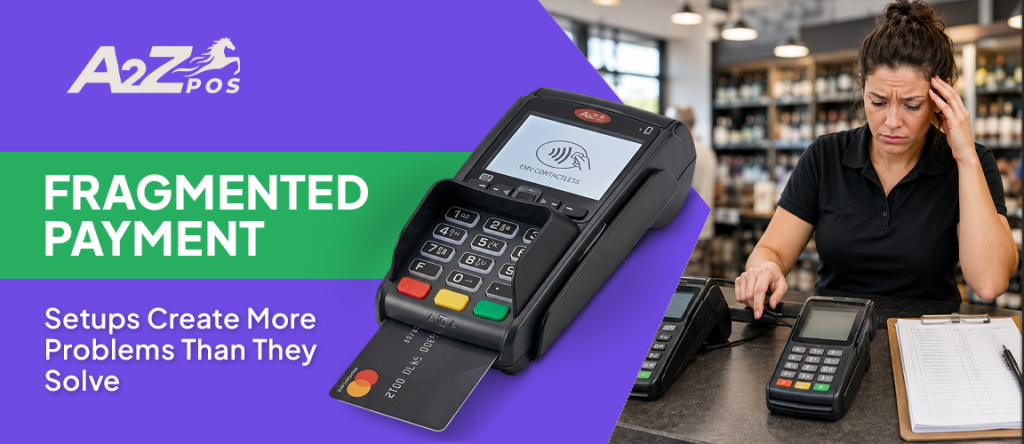
It’s tempting to treat these payment types as separate add-ons, one machine for cards, a separate app for contactless, a manual process for EBT. In practice, this kind of fragmented setup causes more issues than it fixes. Staff end up juggling different steps for different payment types, mistakes creep in during busy shifts, and reconciling the day’s sales at closing turns into a bigger headache than it should be.
This is precisely the problem A2Z POS was built to eliminate. A properly built pos card machine connected to the A2Z platform means every payment type, credit, debit, contactless, Snap EBT Card, and split payments, runs through the same system, updating sales records and inventory in real time. Nothing needs separate manual reconciliation at the end of the night, because nothing was ever tracked separately to begin with.
The Payoff of Supporting More Payment Types
The change is rarely dramatic on day one. It shows up gradually: fewer abandoned transactions, shorter lines during rush hours since contactless moves faster than chip insertions, fewer awkward moments where a customer leaves because their preferred payment method wasn’t supported. Over months, this steady reduction in friction adds up to real, measurable revenue a store might have been quietly losing without ever realizing it.